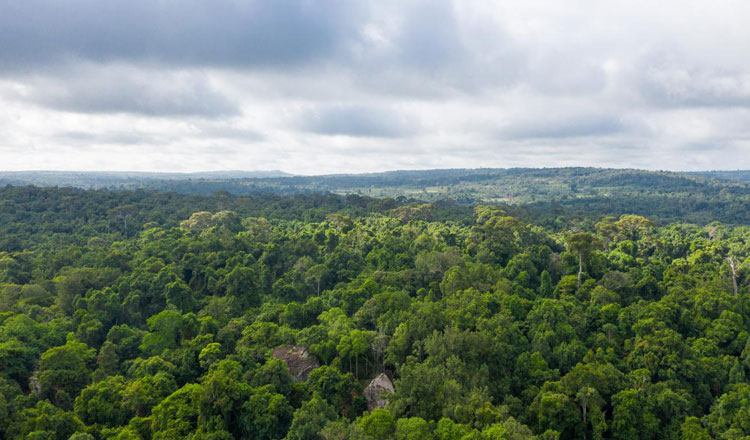
We arrived in the Cambodian uplands at the close of the wet season. The roads were soft. Our guide, a man whose family has worked these forests for four generations, led us up a path I would not have recognised as a path.
The Aquilaria stands here are old. Some of the trees we passed have been marked and re-marked across decades — first by his father, then by him. They will be marked again before they are cut, if they are ever cut.
The selection is a lifetime's work.
“We do not own the forest. We work for it. The forest selects what we may take.”
Wild agarwood is not a commodity in the usual sense. There is no daily fix on a price screen. There is a tree, and there is the tree's history, and there are the families who carry it.
Buying agarwood, when it is done well, is closer to commissioning a piece of art than ordering a sack of grain.
By the third day we had walked deep into the canopy. The light came through in narrow shafts. Our guide stopped, placed a hand on a trunk, and listened.
He moved on.
We saw three more trees that day; he marked none of them.
On the way back to the village he told us, almost in passing, that next year he might cut one of the older specimens. He was not sure. The wood had grown well, but the rains had been late.
He would think about it through the dry season.
He would tell us in the spring.